 Good For One Galaxy
One thing we came to enjoy on our South American trip was hiking. It was a great way to get off the beaten track and become immersed in a country’s natural side.
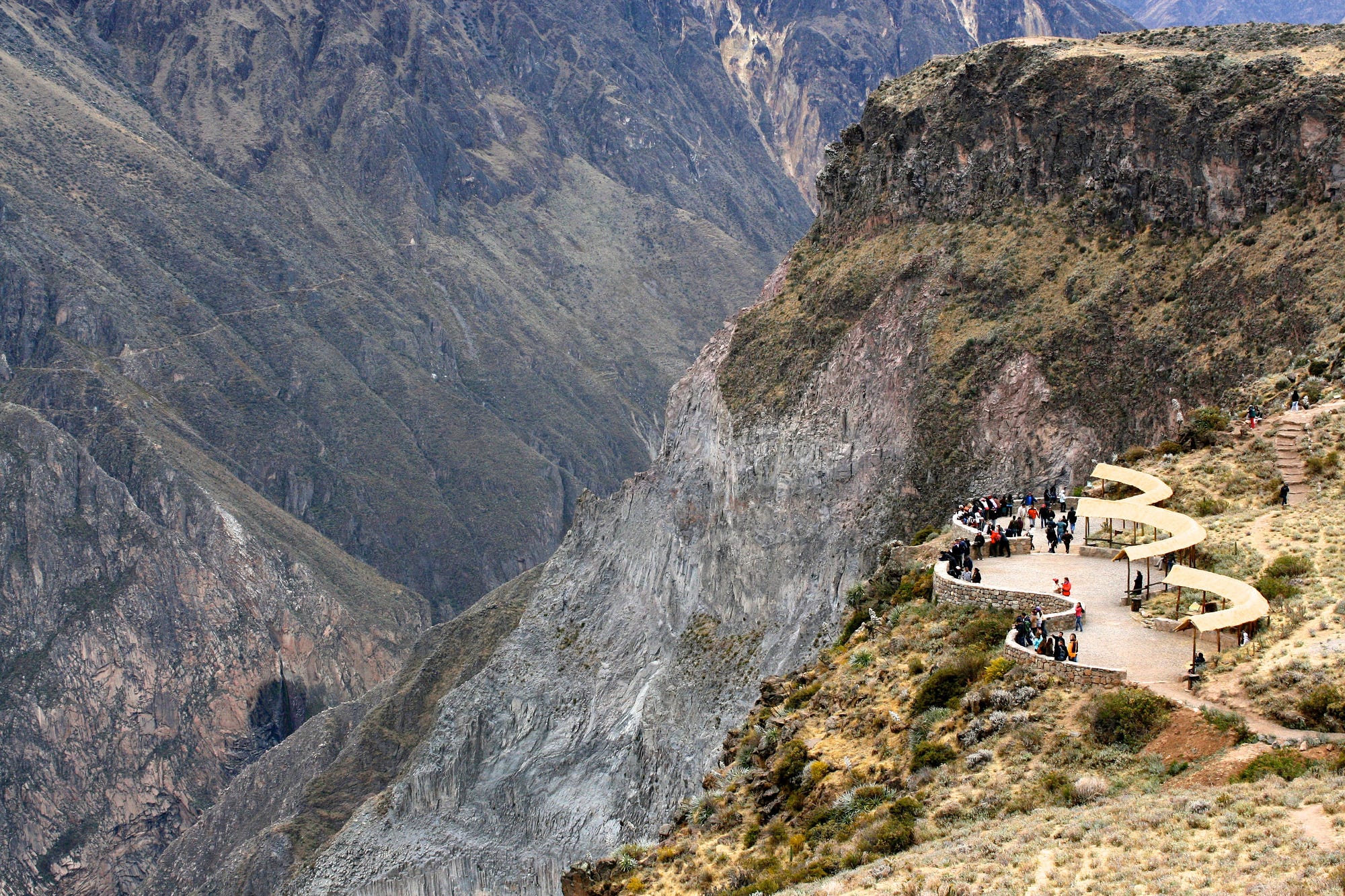 Condor lookout point
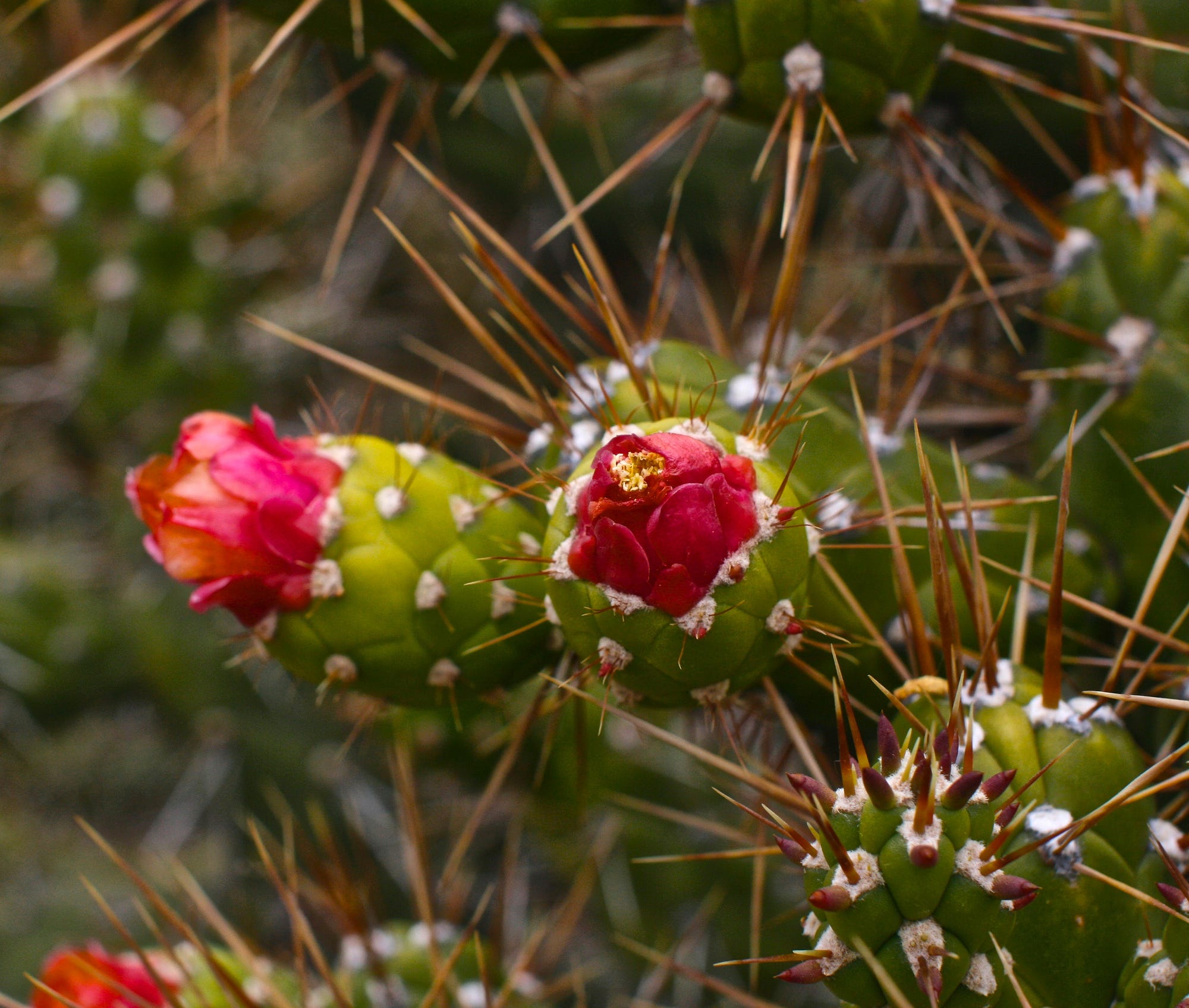 Native desert cactus flower
Just a few hours outside of Arequipa lies the Colca Canyon. Being twice as deep as the Grand Canyon, it makes for an impressive landscape that is rugged and extreme; days in the canyon are hot and at the same time you are surrounded by snow capped mountains, but as night fell at the top of the canyon, the temperature plummeted.
At the base of the canyon, lush oasis’ and terrace landscapes line the Colca River whilst at the top vegetation is sparse.
Many people come to the canyon for two reasons; one to see the elusive condor, which has made the canyon their home, and the other is hiking.
Unfortunately the Condor lived up to its name whilst we were there and we didn’t manage to spot any, but our trek to the base of the canyon and back was truly awesome, for what lied at the bottom was a tropical oasis.
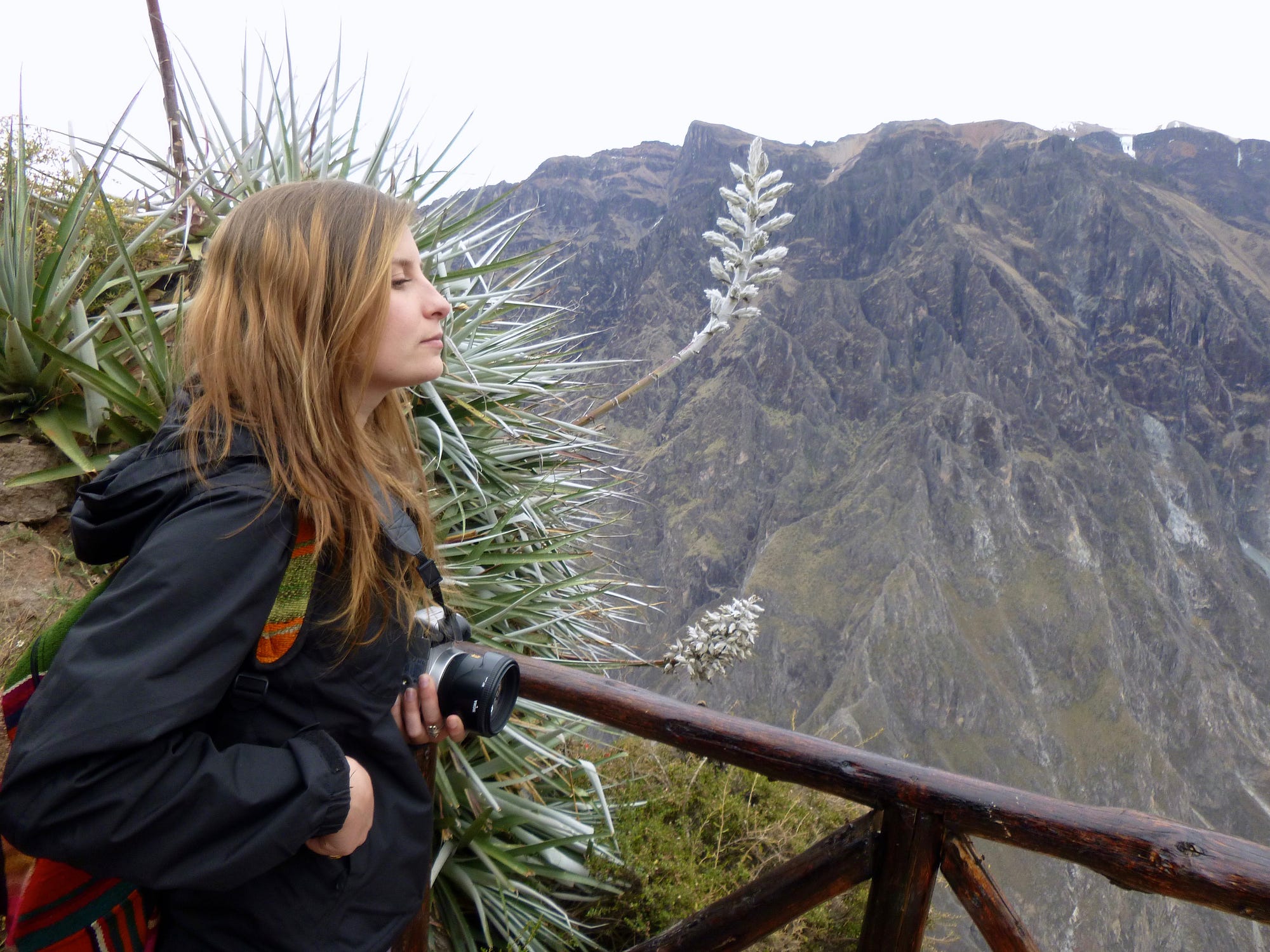 Looking, but no condors. We were told that wind conditions in the canyon have to be just right in order for the condors to be able to soar through.
The beginning of the two day trail started at the top of the canyon, on the edge of a little town called Sangalle.
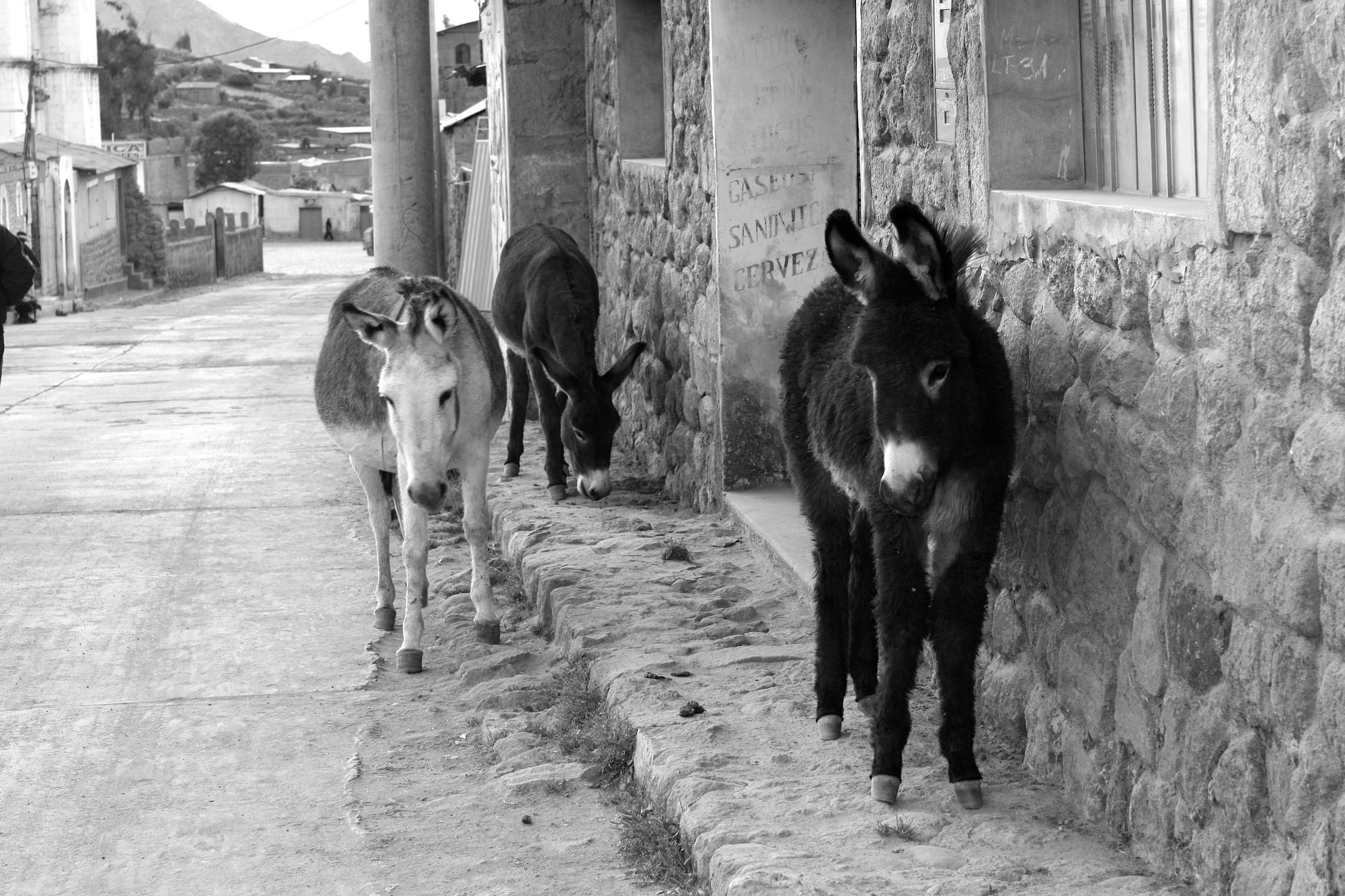
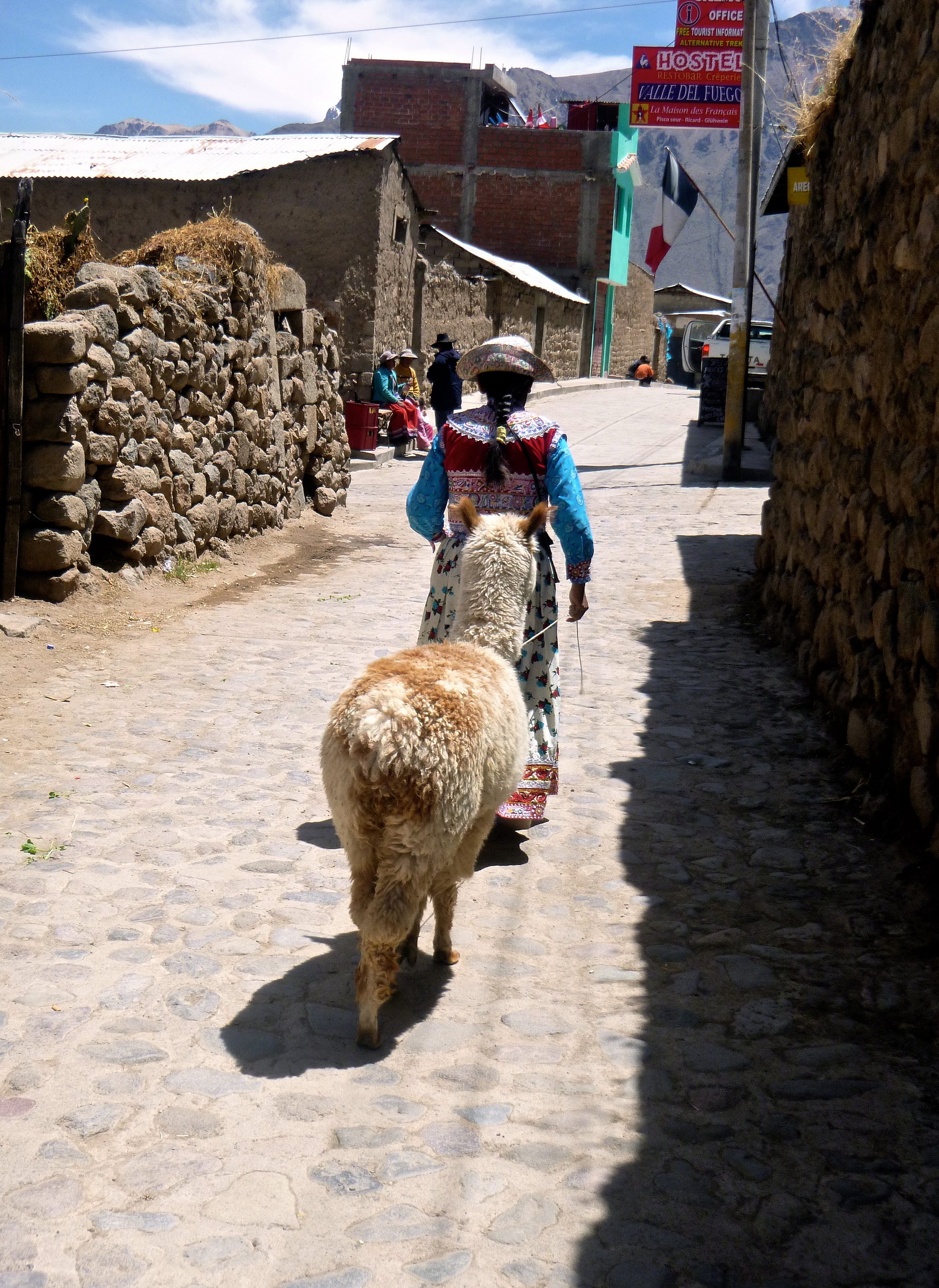
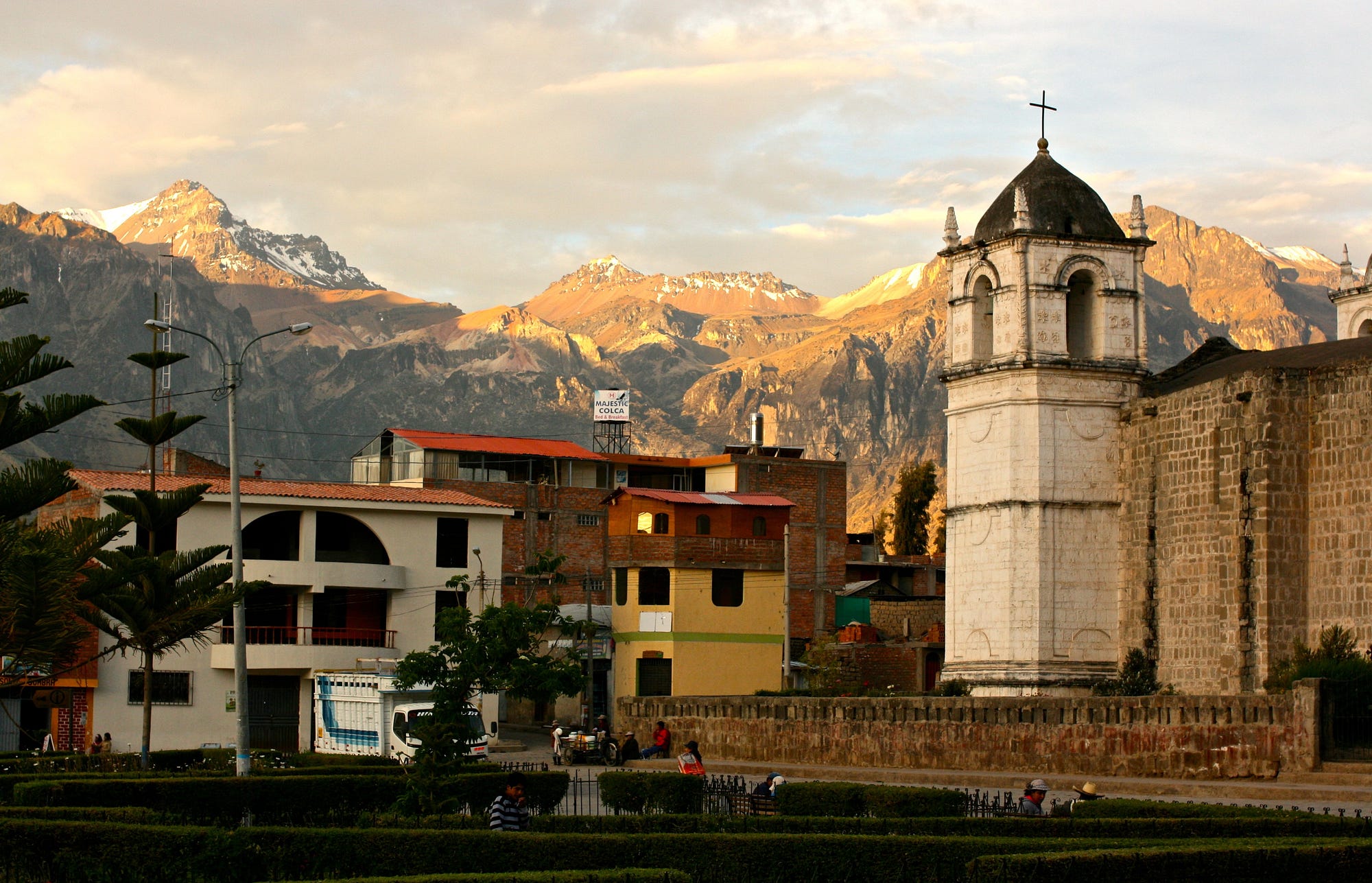 Life around the canyon is simple and peaceful
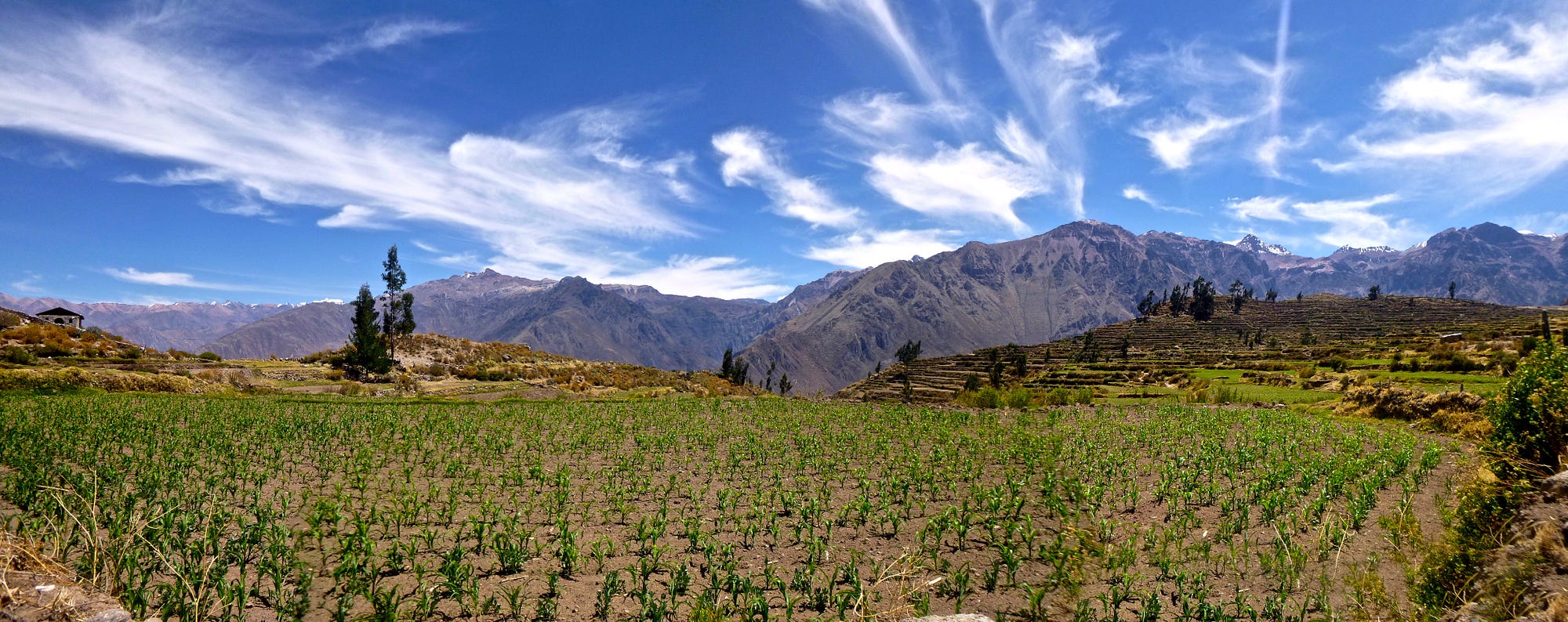
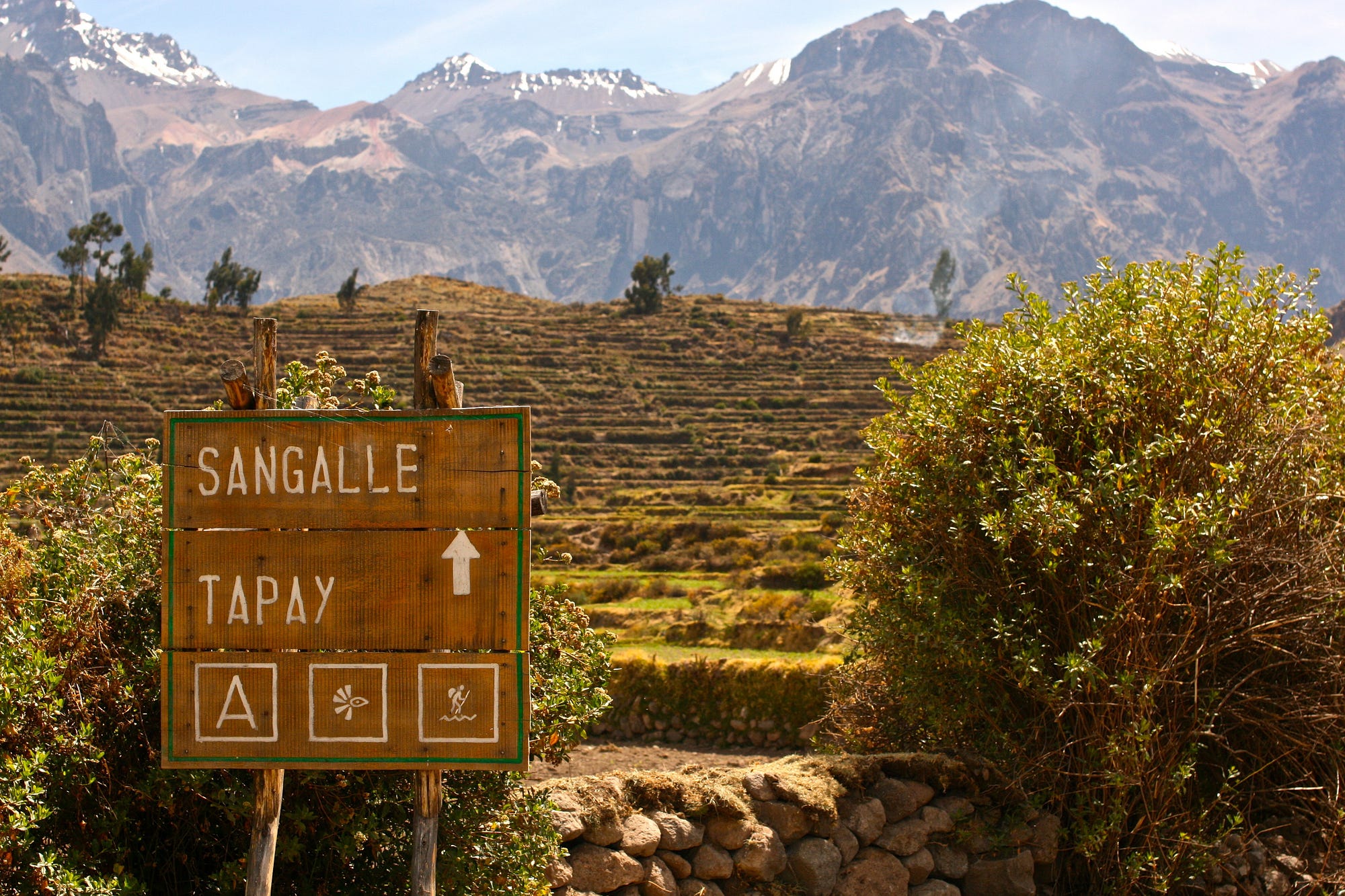
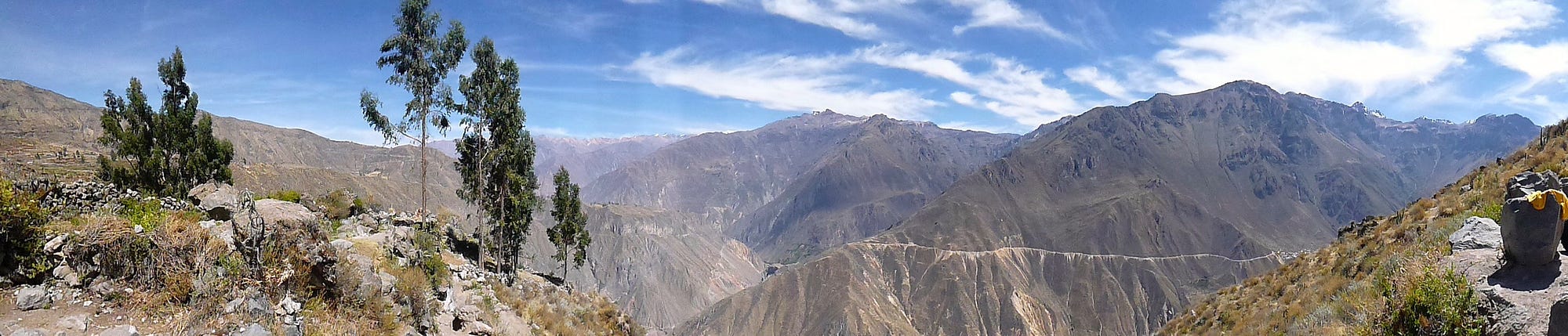
We were warned about the extreme heat in the canyon during the day, so we started our trek in the cooler early morning. After a few wrong turns, we finally reached the lookout point at mouth of the canyon. Now, we needed to go about 2 km straight down, and this is where it got hot and hard.
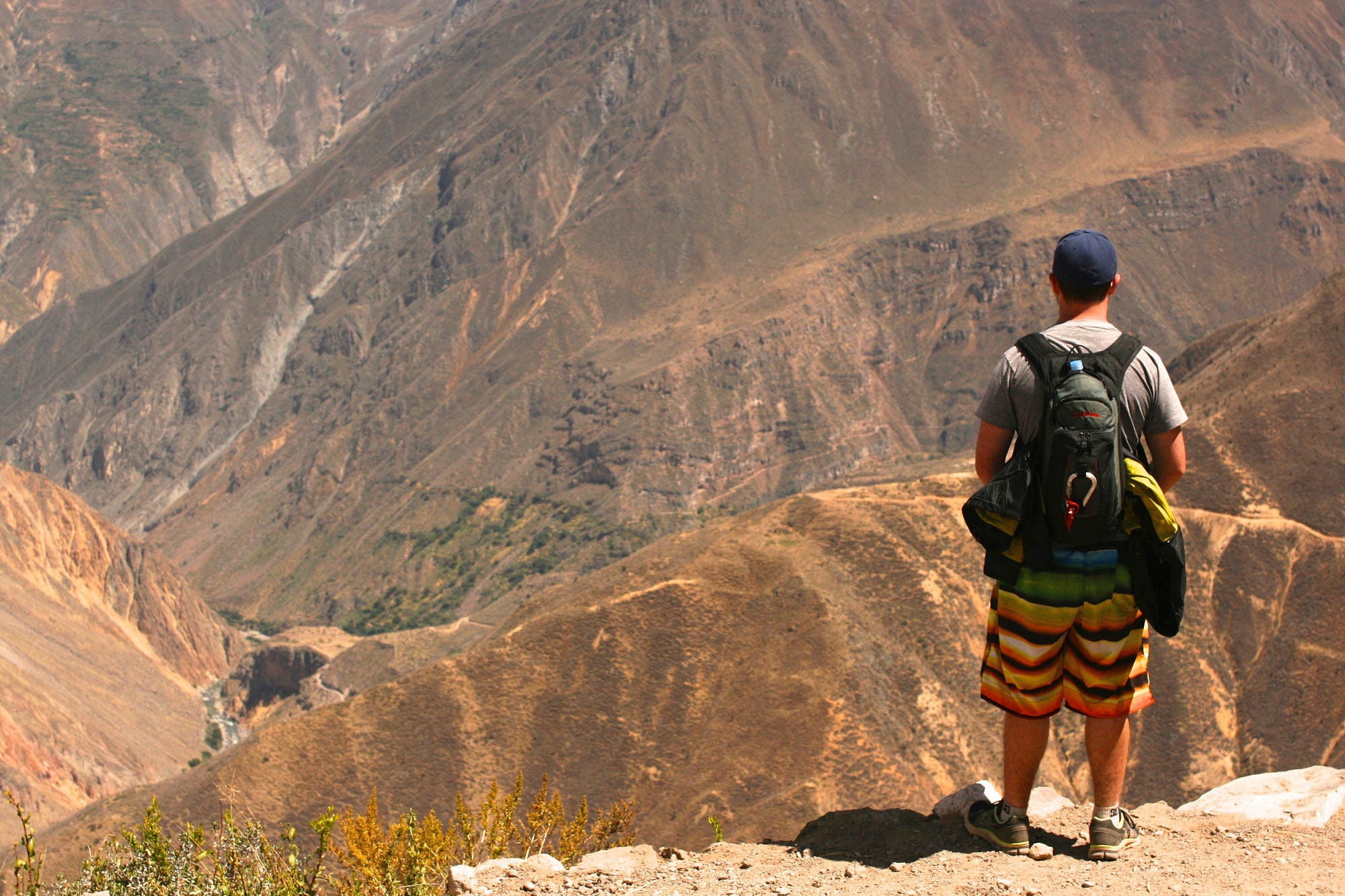 Looking over the canyon before our descent
The trail was loose, rocky, and steep. The constant S bends made you feel a little dizzy at times, combined with the extreme heat of the day and the strength of the sun, we were being worn down quickly. At this point we were hoping it was all worth it. And then, about half way down the canyon, we saw a glimpse of our destination; a patch of greenery and tropical palms wedged between nothing but the river and two bare cliff faces. Seeing this made us want to move faster!
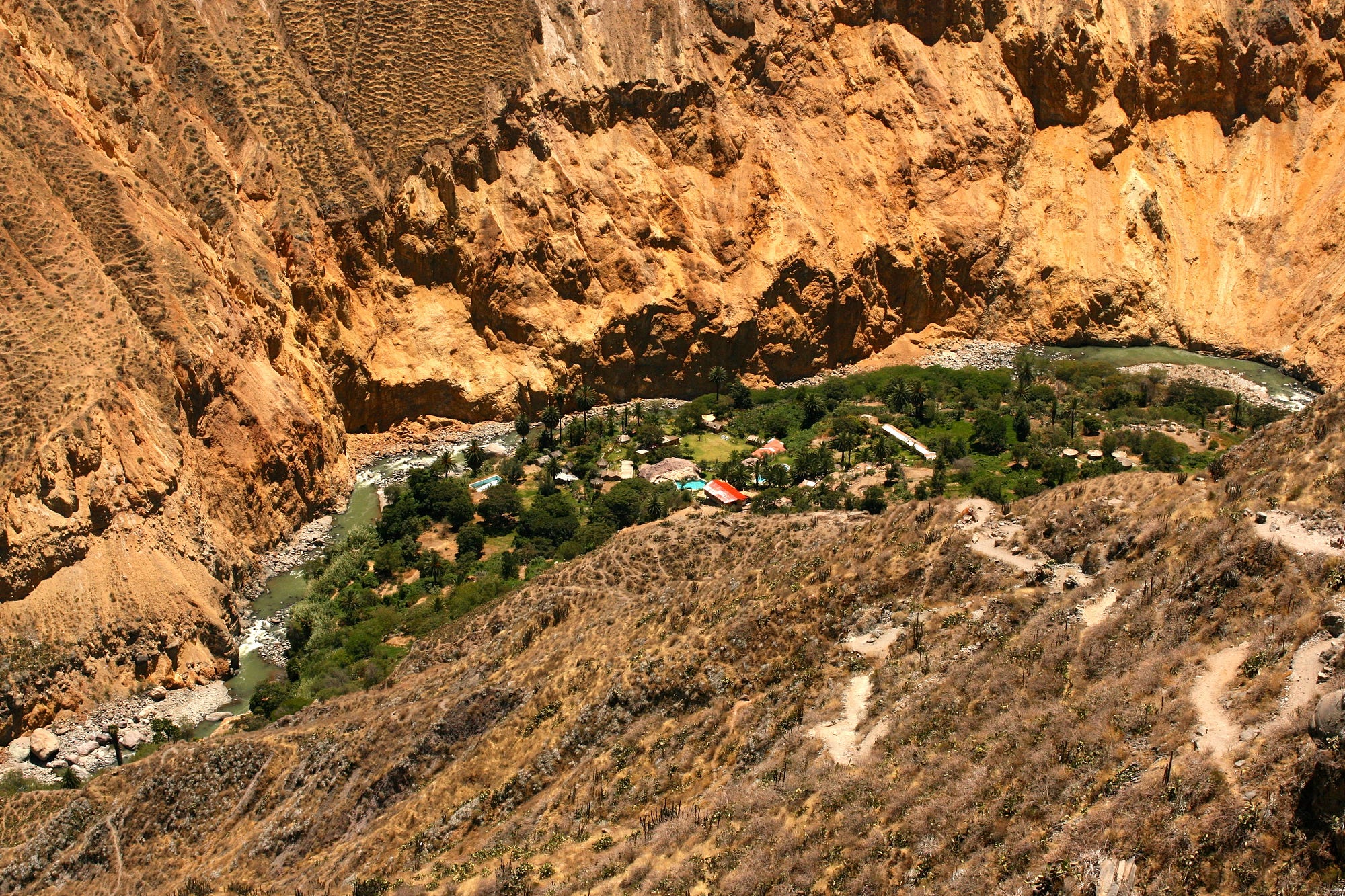 The oasis that awaits us
Covered in sweat and dust, it was about 2 in the afternoon when we had finally reached the base of the canyon. There were a few quaint “resorts” as they call them, all lined with palm trees, cactus and creeping bougainvillaea, and all with less than the basics; just thatched roof over a dirt floor and a raised mattress was the room, there was no power in the huts, no lights just a generator for the 1 burner kitchen that served simple Peruvian staples, and a manual toilet facility.
But there was one major bonus, they had a gigantic pool which we were ecstatic about! We practically laid in it all afternoon. We figured some people weren’t really keen to stay in a place like this but the basic nature of it adds to the charm and the tranquillity.
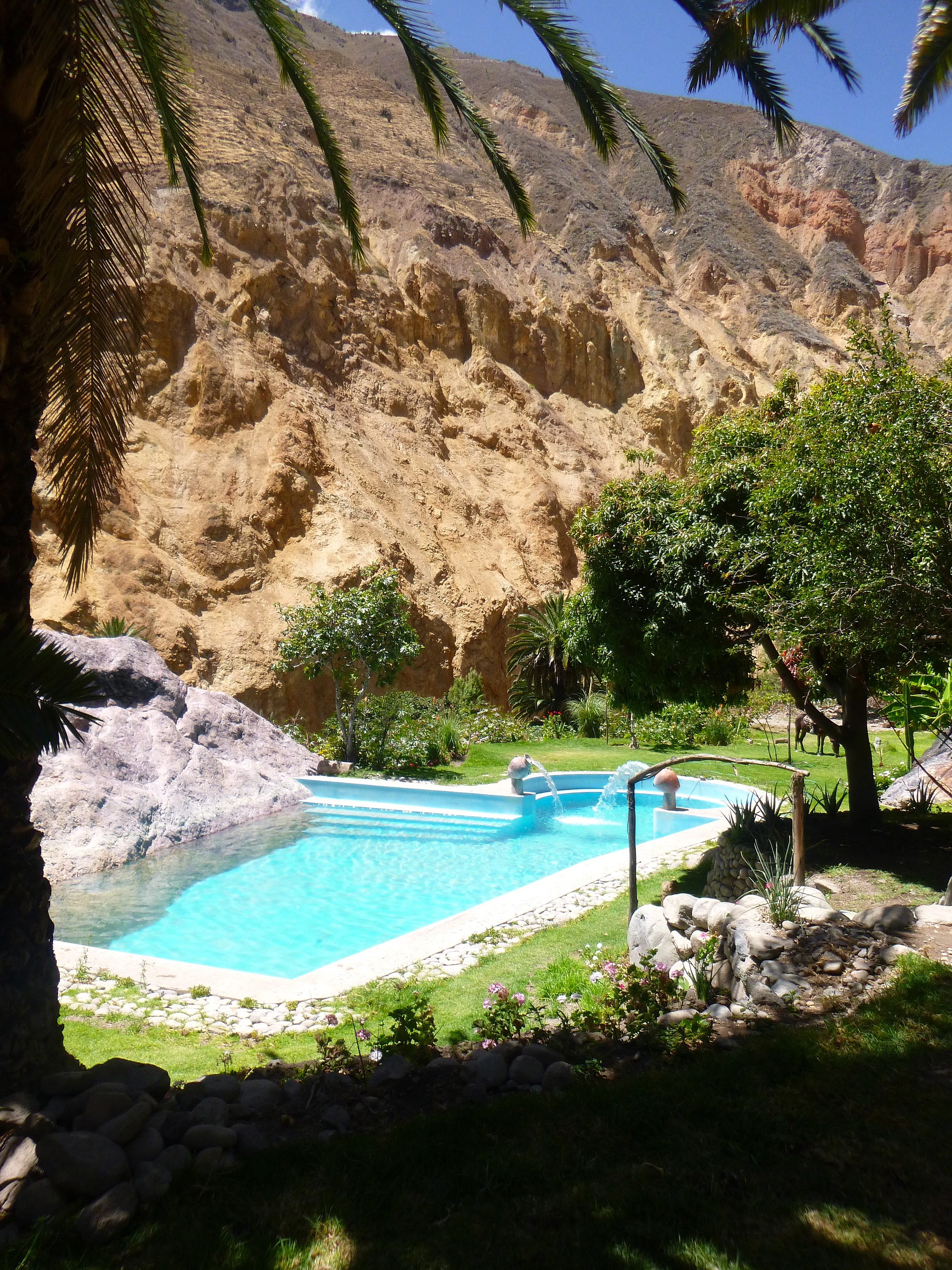
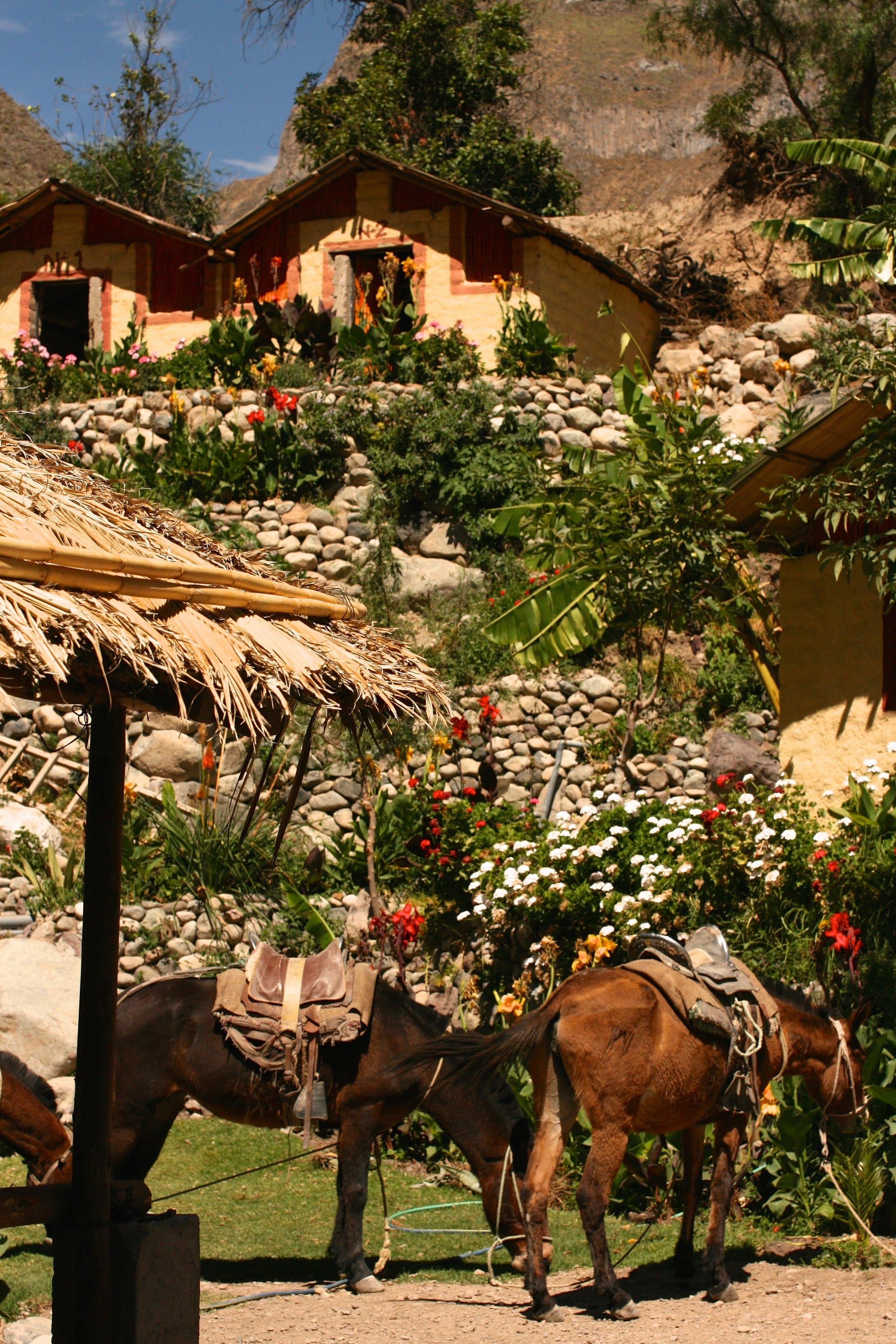
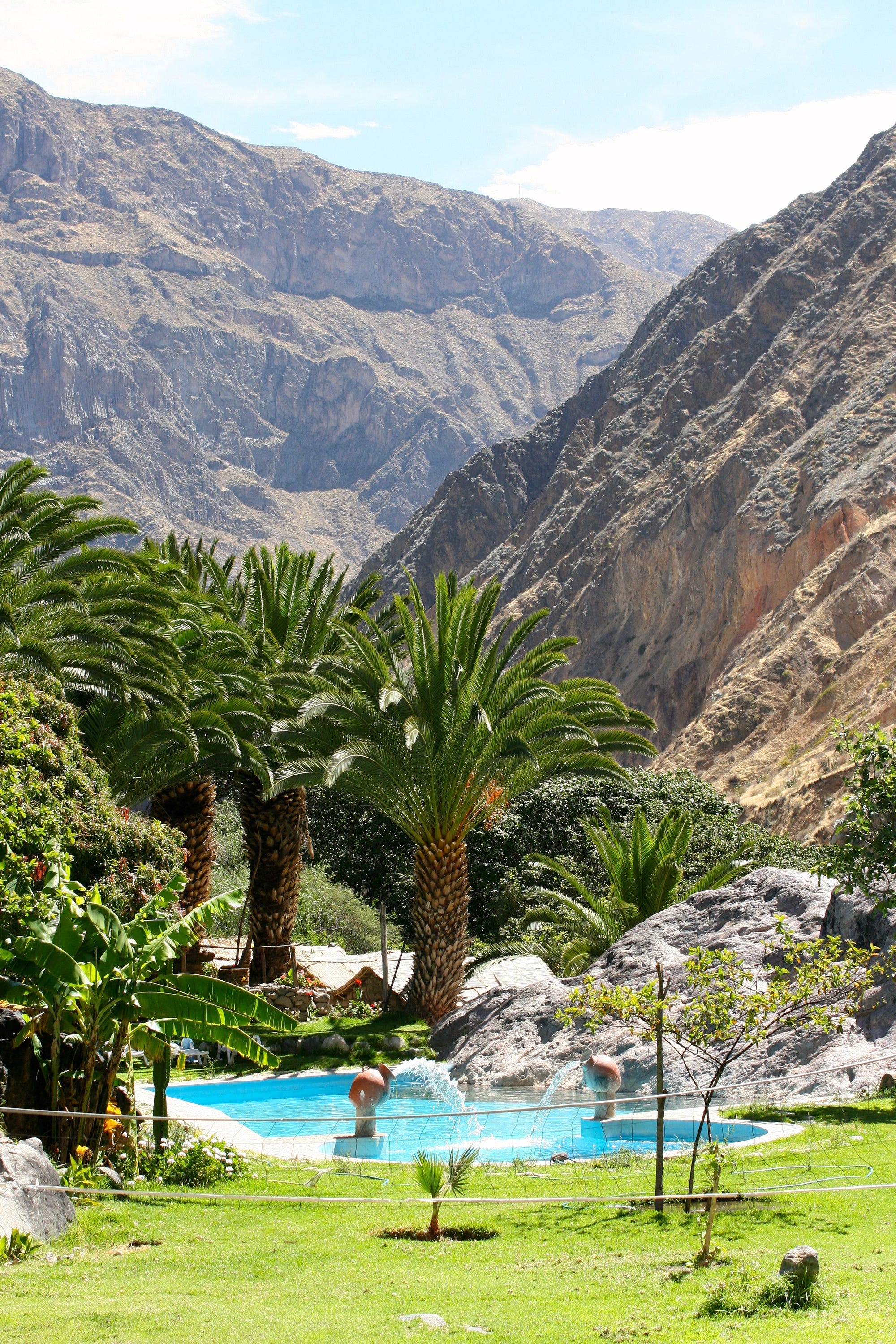
As night fell in the canyon, the only noise came from crickets chirping and the river rushing through the valley. And with no light pollution, the sky was lit with thousands of bright twinkling stars.
They next morning was another bright and early start for the trek back up the canyon, and boy was it gruelling. We passed a few groups on the way up, including some over excited Australians downing whiskey on the descent and some Polish travellers only starting down far later in the day.
It seemed even hotter this day, and the constant upward stairs and steep slopes made for the most extreme jelly legs. But as we reached the top, sunburnt, exhausted and feet blistered, we looked back at the canyon and were so glad we did it.