 Good For One Galaxy
The city of Santiago is our first stop in Chile after crossing the Andes from Argentina.
 Santiago Skyline
Our fondest memories of Santiago were of eating the enormous completos (hot dog with chopped tomato, onion, guacamole, pickles, mayo, mustard and more), wandering through local food markets and munching on palm sized strawberries and hoeing into cheap (and not so great tasting!) litres of beer in a hip beer hall packed to the brim with local university students.
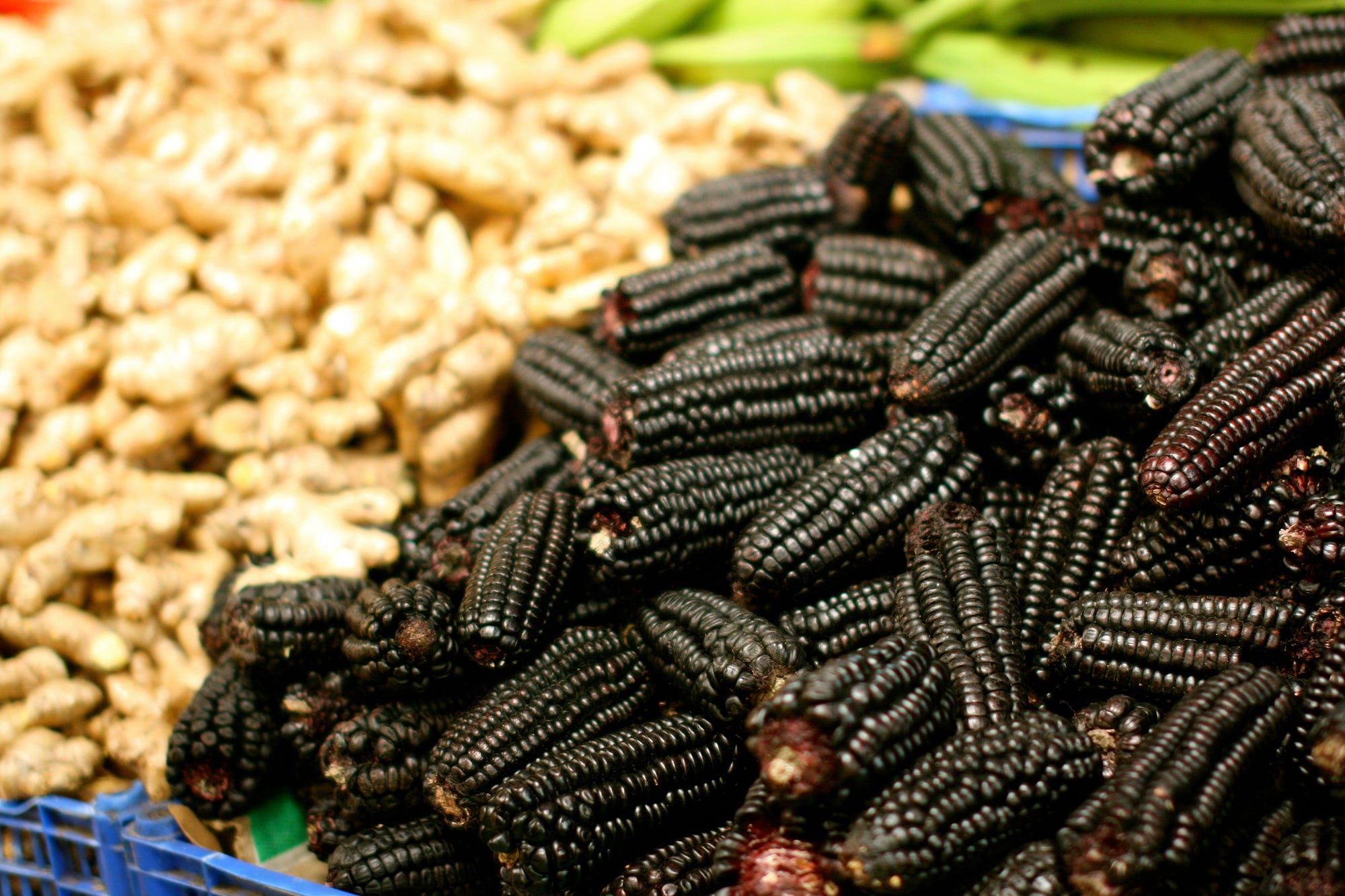 Purple corn — used to make sweet drinks like Chicha Morada
 Bright blue roses for sale
We stayed in a busy backpackers hostel in the heart of Barrio Bella Vista, a suburb a few minutes from downtown Santiago. Hip graffiti art adorned the streets and local bars (which were just about always full, no matter the time of the day) spilled out onto the sidewalk. It was a great area to wander around and for an interesting night out in Santiago.
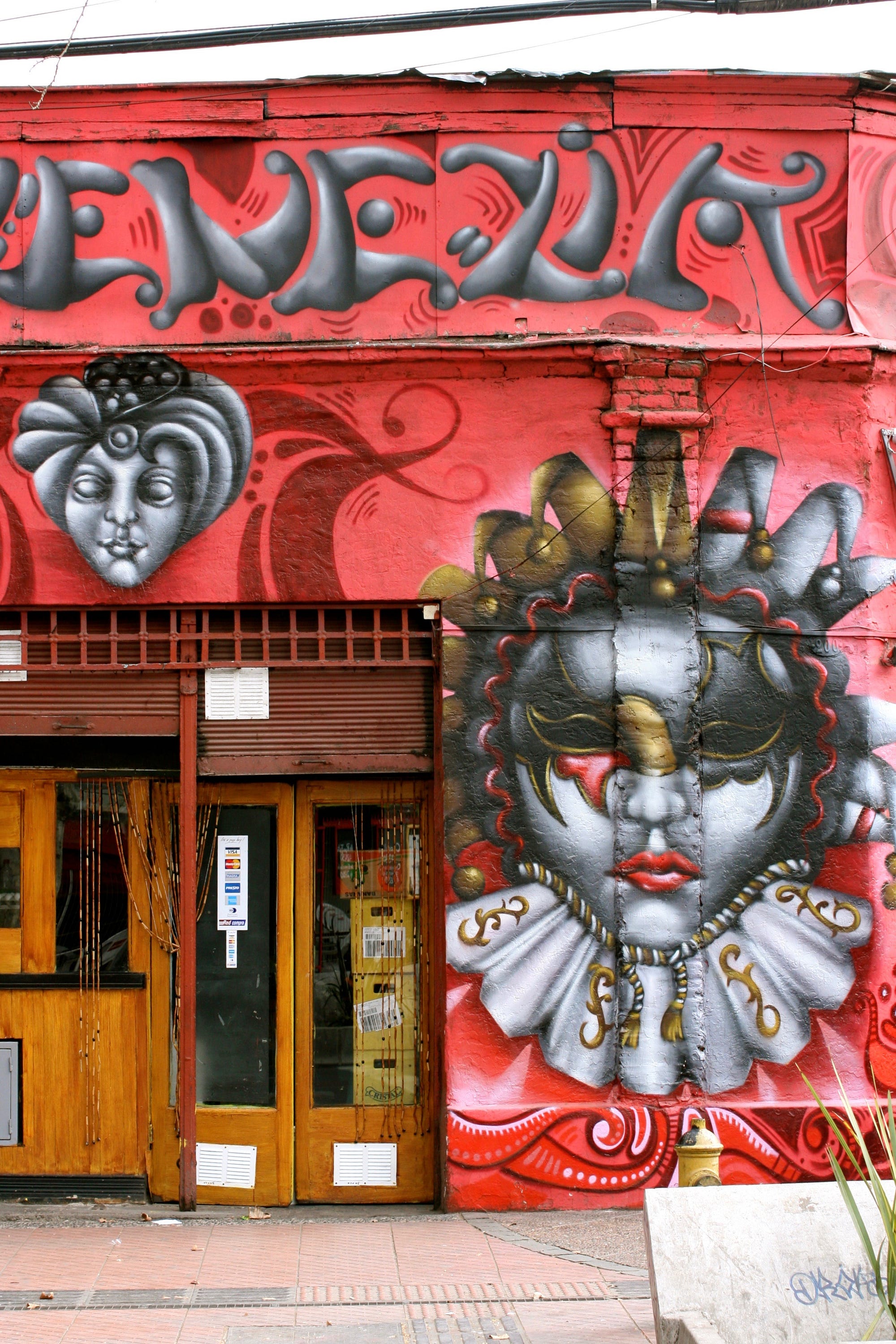 Street art in Bella Vista
At one end of town was a large hill, which towered over the city skyline. At the top on the hill is a great 360° view of the whole of Santiago, however the smog that continuously lingers over the city hinders the view of the Andes and beyond.
Santiago is the political and economical hub of the country with a deeply complex political and social history. The city has been ravaged by dozens of earthquakes, bombed by its own military, seen the destruction of dictatorships and many asocial uprisings. However it has managed to always overcome hardship and rebuild, becoming a picture of both modernity and acceptance of its turmoil filled past.
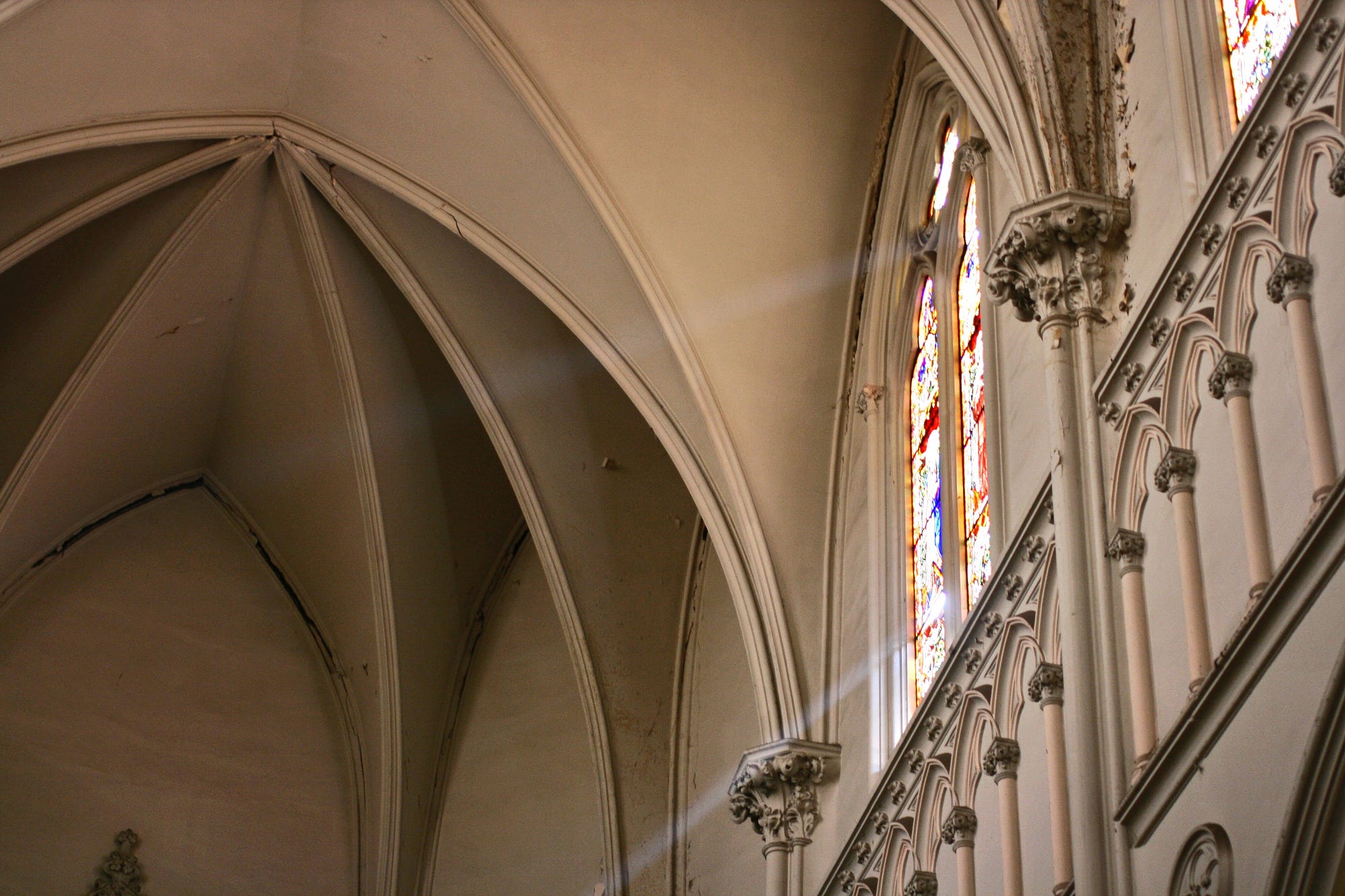 A church in Santiago — the stress of earthquakes on the city are visibly noticeable as the corners of the church are split and cracked
Tyce and I had heard little about Chile’s dictatorship past, so a visit to the Museum of Memory was a great insight into the era of and after General Pinochet’s rule. It’s a well presented museum, best taken with a (free) English speaking guide, that shows the atrocities of this dictatoroship on the Chilean people’s right to freedom and quality of life, and how this trouble past has made the citizens of Chile now speak up for social and economical change. As we wandered through the museum, we could see through the windows that just a block away students were staging what looked like a peaceful protest before they were pummeled with tear gas and water cannons, we couldn’t help but find a little irony in this.
Overall, Santiago is a very modern, liveable city, with a great vibe and inviting social culture.
From here we move on towards the Chilean coast, to a place we were looking forward to the most; Valparaiso.